The numbers every operator hides behind the word “fair”
Our porters, by name: loads, pay, and tipping on Rinjani.
Every operator says their porters are treated fairly. Here are the kilograms, the rupiah, and the tents, so “fairly” means something you can check.
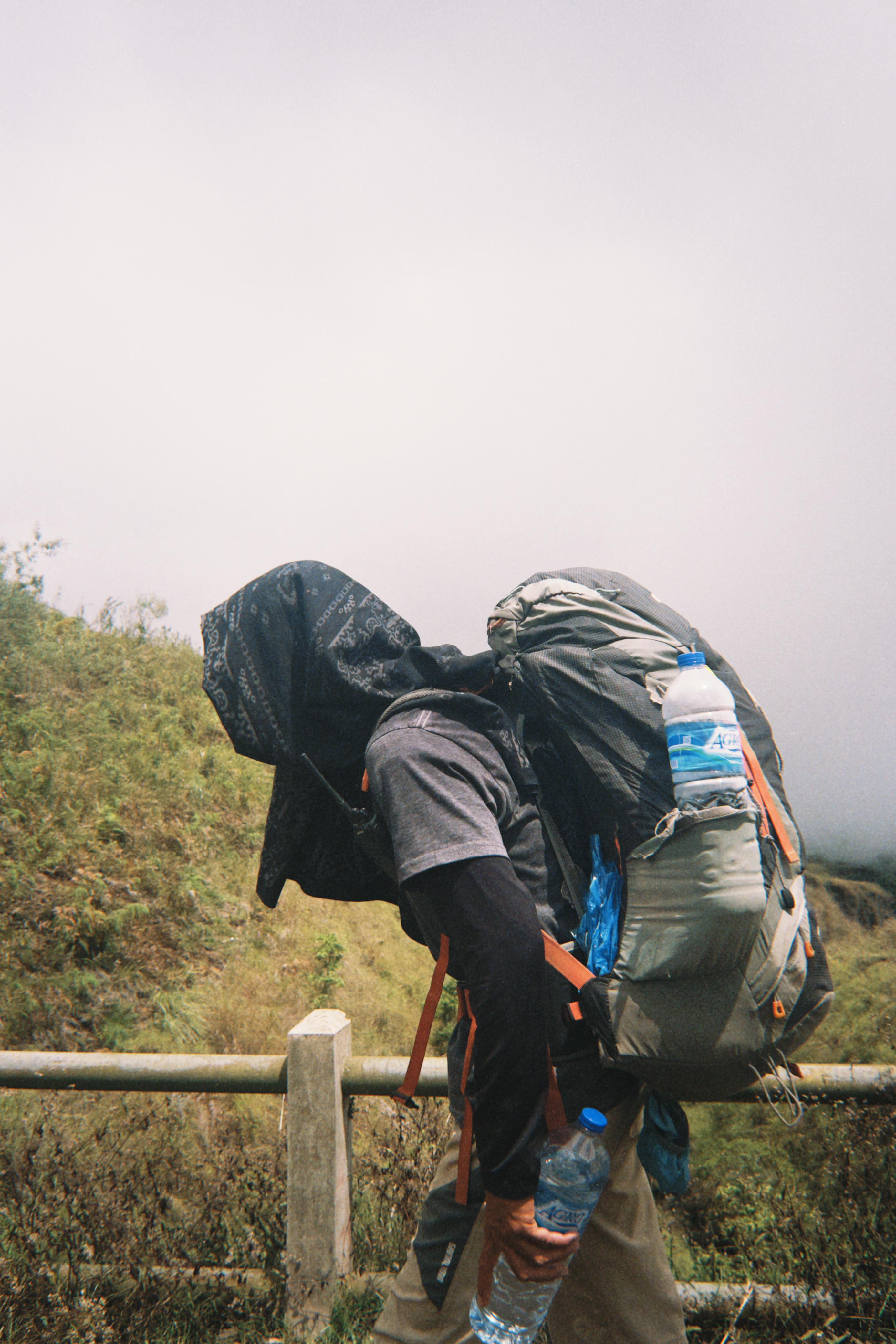
Loads kept light, well under the park limit
We keep our porters' loads light. A trek porter carries about 25 to 30 kg, a personal porter up to 20 kg, all under the national park's 30 kg legal limit, with pay that scales to the load. The cheapest treks are reported to pile on 30, sometimes 40 kilograms on bamboo poles, for a saving that ends up in a low quote.
The park sets a legal load limit of 30 kg per porter in 2026, and it is not weighed at every gate by everyone. We keep our trek porters under that, around 25 to 30 kg, and our personal porters to 20 kg, with pay scaled to the load, and we weigh ours.
What we pay a porter
“Above the village rate” is what everyone says. Here is the actual figure, and the actual village rate beside it, so the gap is a number you can see for yourself, not a claim you have to take on trust.
Paid by us, per day on the mountain, for a trek porter. The wage scales with the load (25-30 kg). A personal porter carrying up to 20 kg is paid IDR 275,000 a day.
The local going rate, set beside ours so the difference is visible rather than asserted.
This gap is the saving a cheap operator keeps and we don't.
Our porters and guides are covered by the accident insurance that every ticket and permit booking has to include. The authorities won't approve the booking without it. The same legal permit that insures you insures the crew. An operator who skips the permit to save money leaves everyone uncovered; we book it every time.
A trek porter earns IDR 25,000 to 50,000 a day more than the village rate, with the wage scaling to the load. That gap is the saving a cheap operator keeps. We don't.
Tipping: what's fair, with zero pressure
We do not build a tip into your price and we will never pressure you for one. Our porters are paid a fair day-rate whether you tip or not. That is the point of Section 2.
That said, the question we get most is “what's normal?” There is no set amount, and Pak Wil won't name one: it is entirely your call and depends on how you felt about the trek. If you'd like to give something, the natural moment is over the final lunch at the end of the trek, handed to the guide and porter team directly. It reaches them, not an office.
Whatever you tip goes to the guide and porter team directly, not through the office.
Gear and food
What the porters sleep in
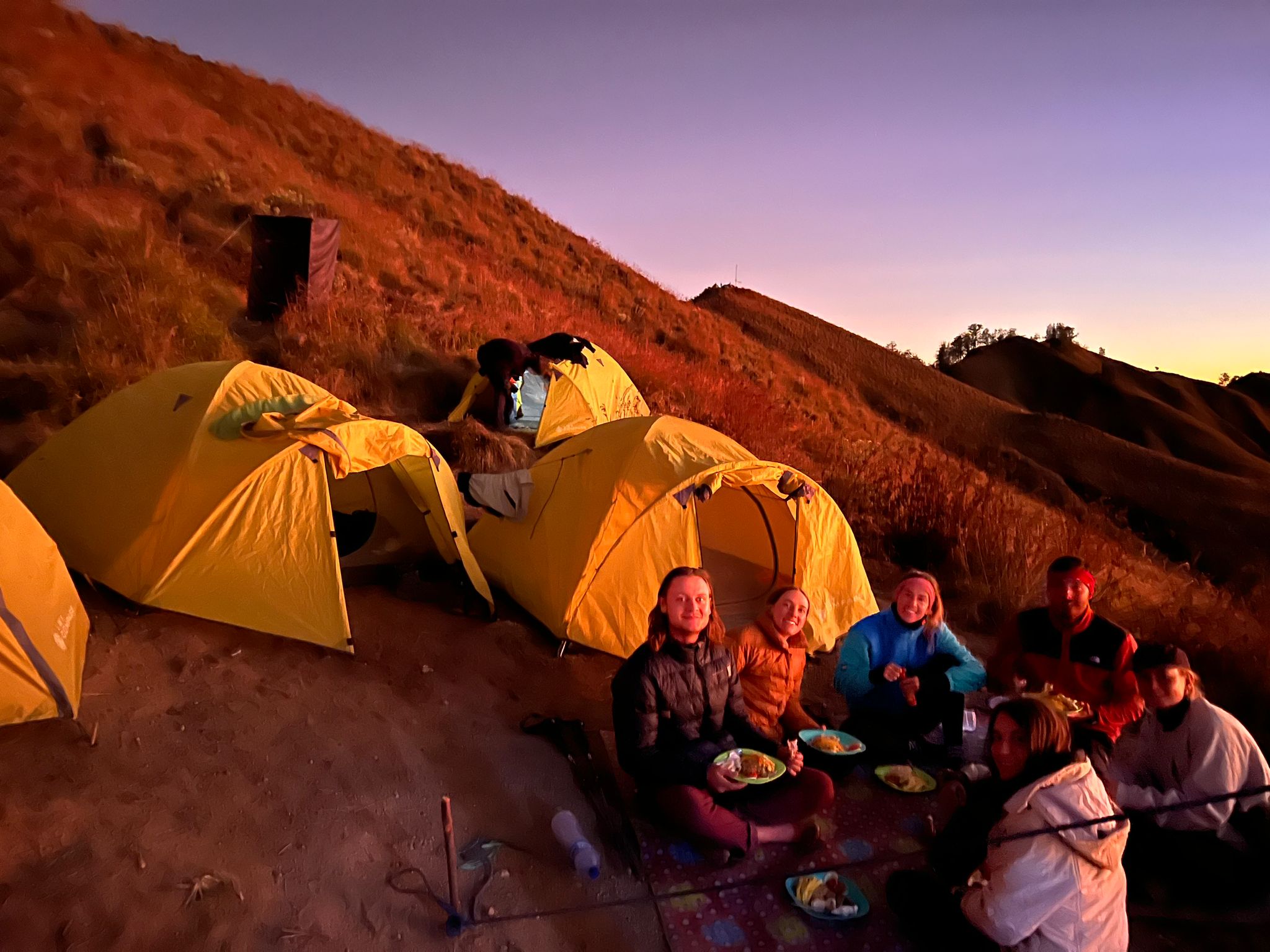
We give our porters real 3-season tents, the standard used across Rinjani, with proper sleeping mats and bags rated for rim-camp cold, the same standard carried for guests. Some still like to rig a simple tarp as well, pitched like a little roof, for shade and rain cover over lunch and rest stops. That is their own choice and a practical one, and the tent is always there for them at night.
What the porters eat
Porters and guides eat proper hot cooked meals on the mountain: real rice, protein and vegetables in the local style, not instant noodles. Guests are served first, then the crew sit down to the same kind of cooked food. Nobody is left to a separate cheaper pot.
The trash we carry back out
Rinjani has a rubbish problem, and a lot of it arrives with trekkers. Everything our group carries up, our porters carry back down: every piece of equipment and all our waste, nothing left behind on the mountain.
We would rather tell you this plainly than show you a staged photo of a bin bag. If you climb with us, you leave the mountain as you found it.
If how the porters are treated is part of how you choose, you've already read the part that matters. Message Pak Wil to book the route you want.
WhatsApp Pak WilWhy we are not the cheapest trek on the mountain
When a Rinjani quote is far below the rest, the difference usually comes out of the porter: a heavier load, a lower wage, a thinner tent, a cheaper meal. That is the saving. We decided a long time ago not to make it, which is why we are mid-priced, not the cheapest.
The lighter loads kept under the park limit, the wage above the village rate, the real tents and the same food are not marketing. They are the reason our number isn't the lowest you'll find.
“The mountain is the same for the porter as it is for you. The weight on his back shouldn't be the difference.”
Pak Wil, Senaru
Last reviewed by Pak Wil: 2 June 2026